

Heavy Duty Castors
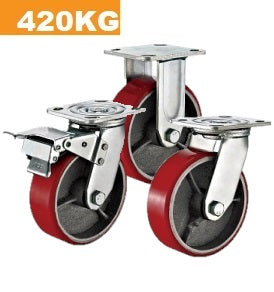
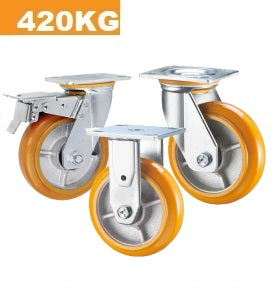
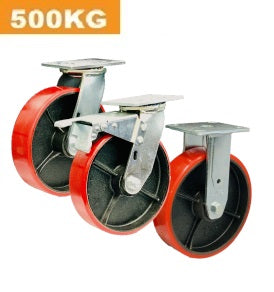
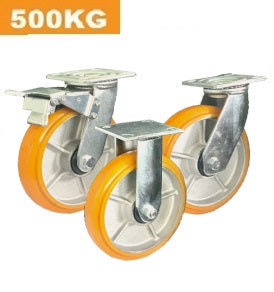
Australian Wheel & Castors stocks heavy-duty castors for warehouse trolleys, industrial machinery, heavy fabrication equipment, and high-frequency commercial use. Load ratings typically range from 500kg to 900kg per wheel, with wheel diameters from 125mm to 200mm. Swivel, fixed, and braked configurations are available in polyurethane, nylon, and cast iron. All orders ship fast across Australia.

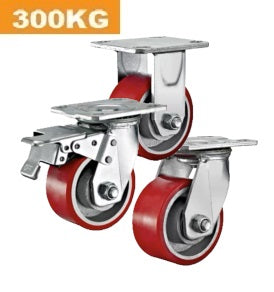

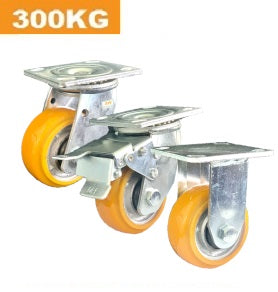

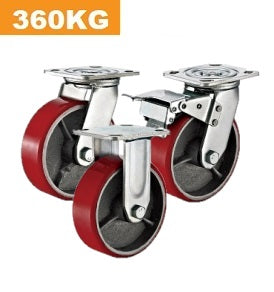

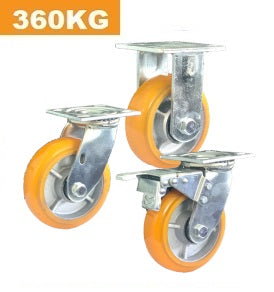





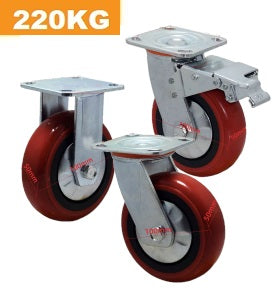

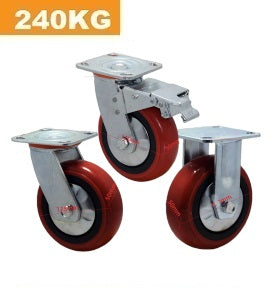


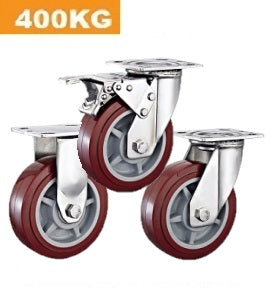


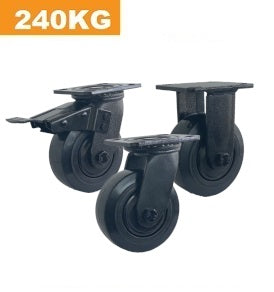

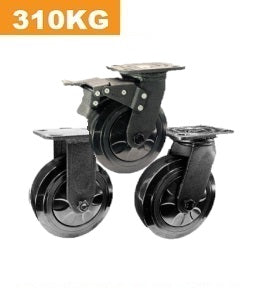

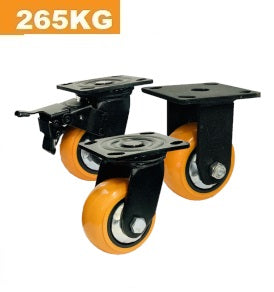


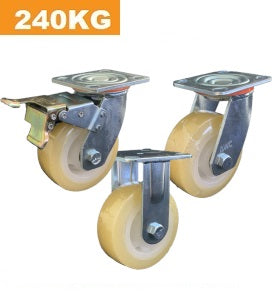
Heavy Duty Castors: Specifications for High-Load Industrial Applications
Heavy duty castors are built for sustained use under loads that standard industrial castors cannot handle reliably. They suit warehouse trolleys carrying palletised goods, fabrication tables, heavy machinery bases, and any equipment where load per wheel regularly exceeds 500kg. Selecting the right model requires attention to bracket construction, bearing type, and wheel material, not just the rated capacity.
Load Rating: 500kg to 900kg Per Wheel
At this load range, the bracket is as important as the wheel. Heavy duty castors use thick-gauge pressed or forged steel rigs with precision roller bearings in the swivel head. Roller bearings handle radial and axial loads better than ball bearings at high weights, maintaining smooth rotation under sustained pressure. Confirm both the wheel rating and the bracket rating before ordering, as they are sometimes listed separately.
Wheel Material Selection
Polyurethane wheels at this load range suit smooth warehouse concrete and provide good floor protection. Nylon wheels handle chemical exposure, oil, and temperatures up to around 80°C without degrading. Cast iron wheels suit very rough surfaces, outdoor yards, and high-temperature environments such as foundries and heat treatment facilities. The correct choice depends on floor condition, temperature, and whether floor marking is a concern.
Wheel Diameter and Rolling Effort
A 150mm or 200mm diameter wheel at 700kg load requires significantly less push force than a 125mm wheel at the same weight. For trolleys moved by a single operator, selecting the largest diameter that fits the frame reduces physical strain and extends bearing life. Larger wheels also handle floor joins, drain covers, and surface irregularities without the jarring impact that damages smaller wheels under heavy loads.
Brake and Locking Requirements
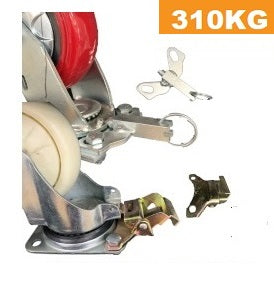
Heavy trolleys on any slope require a total lock brake on at least two castors. A total lock brake engages both the wheel and the swivel simultaneously, preventing the trolley from rolling or rotating. For equipment parked during loading operations, braking all four castors is the safest configuration. Foot-operated pedal brakes are standard at this load range and allow hands-free engagement.
Frequently Asked Questions
How do I confirm a heavy duty castor will fit my existing equipment?Measure the top plate dimensions and bolt hole spacing on your existing castor, or the clearance available under your equipment frame. Check the overall height of the replacement castor to confirm the equipment will sit level. Contact us with these measurements if you need help confirming compatibility.
What is the difference between ball bearings and roller bearings in heavy duty castors?Ball bearings suit lighter loads and provide smooth rotation with low friction. Roller bearings handle higher radial loads and are standard in heavy duty swivel heads because they resist deformation under sustained pressure. At loads above 500kg per wheel, roller bearings provide longer service life.
Can heavy duty castors be used on outdoor concrete yards?Yes, provided the bracket has a corrosion-resistant finish such as zinc plating or hot-dip galvanising. Select nylon or cast iron wheels for outdoor use, as polyurethane degrades with prolonged UV and moisture exposure.
How many braked castors do I need on a heavy trolley?For flat floors, two braked castors on one end of the trolley are sufficient for most applications. For slopes or loading dock environments, brake all four castors. The total braking force must exceed the force required to hold the loaded trolley stationary on the steepest slope it will encounter.
What maintenance do heavy duty castors require?Inspect monthly for wheel wear, bearing play, and bracket cracks. Lubricate swivel bearings every one to three months depending on use frequency. Replace wheels showing flat spots or cracking before the bracket contacts the floor. A failed castor under 700kg of load creates a serious safety risk.