

Medium Heavy Duty Castors
Australian Wheel & Castors stocks medium-heavy-duty castors for industrial trolleys, warehouse equipment, manufacturing carts, and heavy service applications. Load ratings typically range from 300kg to 500kg per wheel, with wheel diameters from 100mm to 150mm. Swivel, fixed, and braked configurations are available in polyurethane, nylon, and rubber. All orders ship fast across Australia.

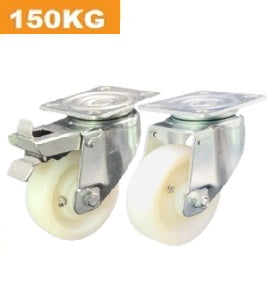

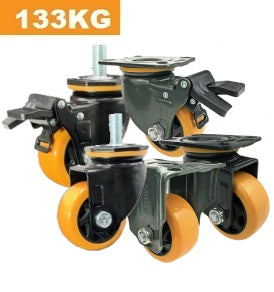

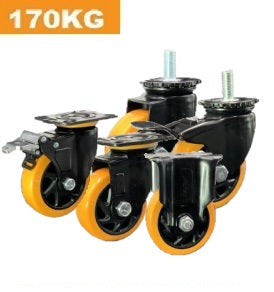

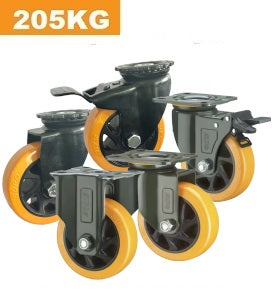

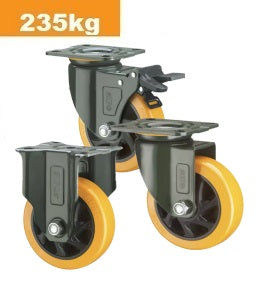

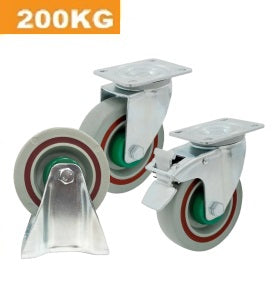

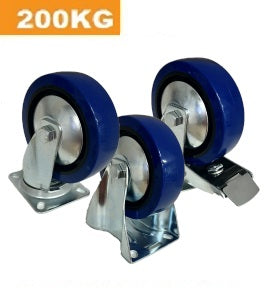

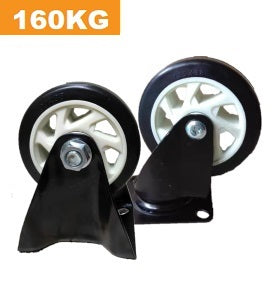

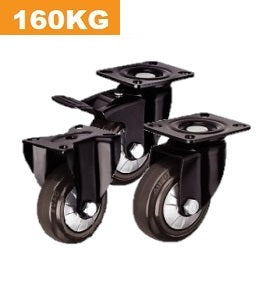

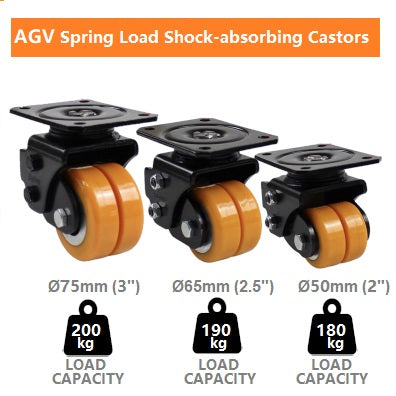
Medium Heavy Duty Castors: Industrial-Grade Mobility for Demanding Environments
Medium heavy duty castors handle the load range where standard workshop castors reach their limit. They suit industrial trolleys, manufacturing carts, warehouse picking equipment, and any application where loads regularly exceed 300kg per wheel. This guide covers the key specifications to check before selecting a model.
Load Rating: 300kg to 500kg Per Wheel
At this load range, bracket construction and bearing quality matter as much as the wheel material. Steel rigs with precision ball or roller bearings maintain smooth rotation under sustained heavy loads. Divide the total equipment weight by the number of castors, add a 25% buffer for dynamic loading, and confirm the rated capacity of both the wheel and the bracket before ordering.
Wheel Material for Industrial Floors
Polyurethane wheels handle smooth and lightly textured concrete well at this load range, rolling quietly without marking the floor. Nylon wheels suit environments with oil, chemicals, or high temperatures where polyurethane would degrade. For rough concrete or outdoor yard surfaces, consider castors with larger diameter nylon or rubber wheels to distribute the load across a wider contact area.
Wheel Diameter and Bracket Height
Larger diameter wheels reduce rolling resistance and handle floor irregularities more easily. At 300kg to 500kg per wheel, a 125mm or 150mm diameter wheel requires significantly less push force than a 100mm wheel carrying the same load. Check the overall height of the castor against the clearance available under your equipment before ordering.
Swivel Bearing Quality
At this load range, the swivel bearing takes considerable stress during direction changes. Double ball bearing swivels are standard for medium heavy duty applications. They maintain smooth rotation under load and resist the lateral forces generated when a loaded trolley is steered around corners. Single bearing swivels are not adequate at this weight range for regular use.
Frequently Asked Questions
What is the difference between medium duty and medium heavy duty castors?Medium duty castors are rated up to around 300kg per wheel and suit workshop trolleys and service carts. Medium heavy duty castors are rated from 300kg to 500kg per wheel and are built with heavier steel rigs and higher-grade bearings for sustained industrial use.
Do I need a total lock brake for industrial trolleys?For trolleys used on slopes or during loading operations where the equipment must stay stationary, a total lock brake is the safest option. It locks both the wheel and the swivel simultaneously. For flat warehouse floors with minimal slope, a wheel-only brake is often sufficient.
Can medium heavy duty castors handle outdoor yard surfaces?Some models suit outdoor use on compacted gravel or smooth paving. Check that the bracket is zinc-plated or powder-coated for corrosion resistance, and select a wheel material rated for UV exposure and moisture.
What bolt pattern do medium heavy duty castors use?Most models in this range use a 140mm x 110mm or 160mm x 130mm top plate with four bolt holes. Measure your existing frame or check the product specification sheet before ordering to confirm compatibility.
How do I extend the service life of heavy-use castors?Inspect castors monthly for wheel wear, bearing play, and bracket deformation. Lubricate swivel bearings every three months in high-use environments. Replace worn wheels before the bracket contacts the floor, as running on a worn wheel damages the rig and increases the risk of failure under load.