

Blue Elastic Rubber Wheel Castors
Australian Wheel & Castors stocks blue elastic rubber wheel castors for applications requiring superior shock absorption, quiet rolling, and floor protection. The blue elastic rubber compound is softer than standard rubber, providing excellent grip on smooth surfaces and absorbing vibration from uneven floors. Load ratings range from 50kg to 300kg per wheel, with swivel and fixed configurations available. All orders ship fast across Australia.

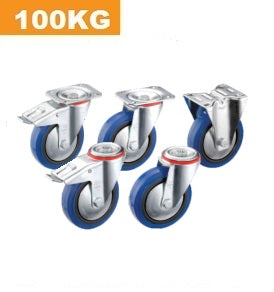

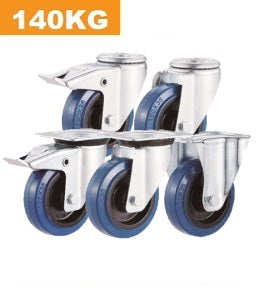

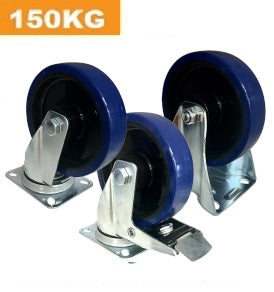


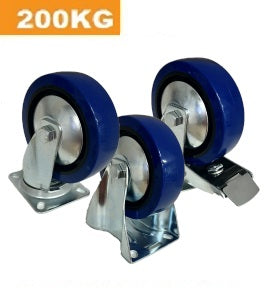

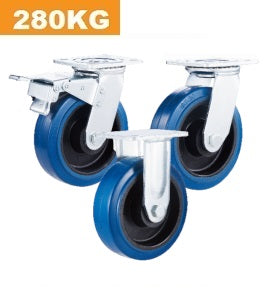


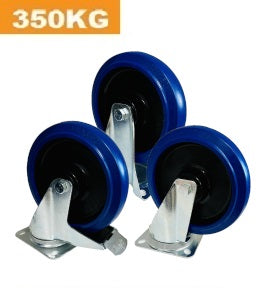

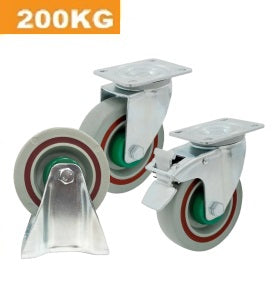


Blue Elastic Rubber Wheel Castors: Quiet, Grippy, and Floor-Friendly
Blue elastic rubber castors are chosen when standard rubber or polyurethane wheels are not soft enough for the application. The elastic rubber compound deforms slightly under load, absorbing vibration and impact rather than transmitting it through the frame. This makes them well suited to environments where noise, floor protection, and load stability all matter.
What Makes Elastic Rubber Different
Standard rubber wheels use a harder compound that resists deformation. Elastic rubber uses a softer, more flexible formulation that compresses under load and recovers its shape when the load is removed. This compression absorbs shock from floor joins, thresholds, and surface irregularities, reducing the jarring felt by operators and protecting fragile loads from vibration damage.
Typical Applications
Blue elastic rubber castors are common in hospitals and aged care facilities where quiet rolling and floor protection are priorities. They also suit laboratory trolleys carrying sensitive instruments, audio-visual equipment carts, and any application where vibration could damage the load or disturb nearby work. The blue colour is a standard industry identifier for this wheel compound, making it easy to specify and reorder.
Floor Compatibility
Elastic rubber wheels grip smooth surfaces including vinyl, linoleum, polished concrete, and timber without marking or scuffing. They are not suited to rough outdoor surfaces or environments with oil or solvent contamination, as these conditions degrade the rubber compound over time. For indoor smooth-floor applications, elastic rubber outperforms both standard rubber and polyurethane in terms of grip and vibration absorption.
Load Ratings and Sizing
Blue elastic rubber castors are available from 50kg to 300kg per wheel, with wheel diameters typically ranging from 75mm to 150mm. Larger diameter wheels roll more easily and absorb more vibration. For trolleys that travel long distances or carry sensitive loads, selecting the largest diameter that fits the frame reduces operator effort and improves load protection.
Frequently Asked Questions
Why are elastic rubber castors blue?The blue colour is a standard industry convention for identifying the elastic rubber compound. It allows facilities managers and procurement teams to specify and reorder the correct wheel type without needing to test the hardness of each castor. Other rubber compounds are typically grey or black.
Are blue elastic rubber castors suitable for hospital use?Yes. They are one of the most common castor types in healthcare environments. The soft compound rolls quietly on vinyl and linoleum floors, does not mark surfaces, and absorbs the vibration that harder wheels transmit to sensitive medical equipment and patients.
How do elastic rubber wheels compare to polyurethane wheels?Polyurethane wheels are harder and more durable under sustained heavy loads. Elastic rubber wheels are softer, quieter, and provide better vibration absorption and grip on smooth surfaces. For light to medium loads in quiet indoor environments, elastic rubber is the better choice. For heavy industrial use, polyurethane lasts longer.
Can elastic rubber castors be used on ramps?Yes. The soft compound provides good grip on smooth ramp surfaces. Confirm the load rating covers the full weight of the trolley and its contents, as ramp use increases the effective load on the downhill castors.
Do blue elastic rubber castors leave marks on floors?No. The elastic rubber compound is non-marking on smooth indoor surfaces including vinyl, linoleum, polished concrete, and sealed timber. This is one of the primary reasons they are specified for healthcare and aged care facilities.