

Stainless Steel Castors
Australian Wheel & Castors stocks stainless steel castors for food processing, pharmaceutical, marine, and other environments where corrosion resistance and hygiene are required. The bracket, swivel head, and fasteners are manufactured from grade 304 or 316 stainless steel. Wheel options include stainless steel, polyurethane, and rubber to suit different floor types and hygiene requirements. All orders ship fast across Australia.

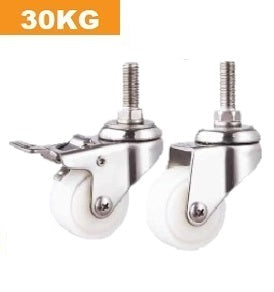

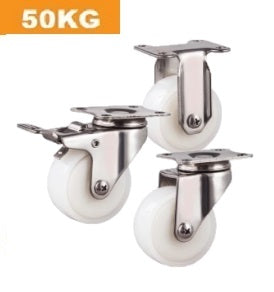

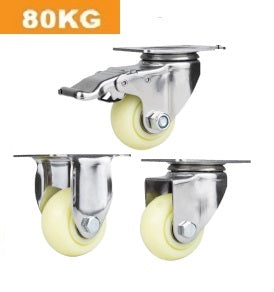

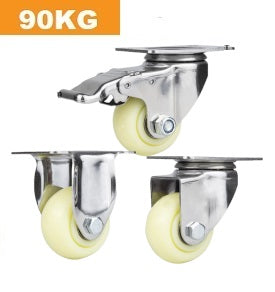

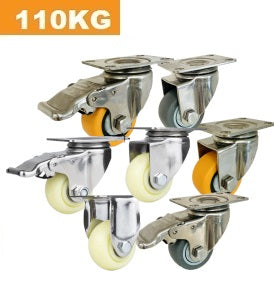

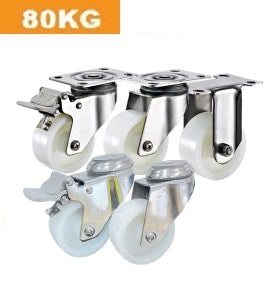

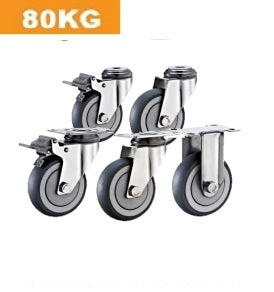

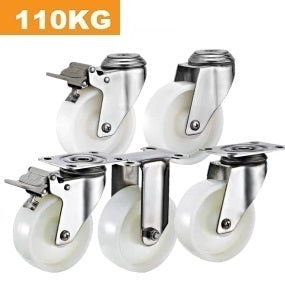

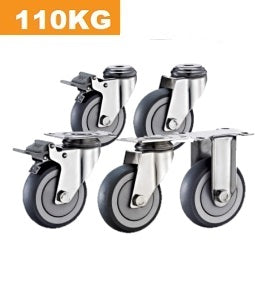

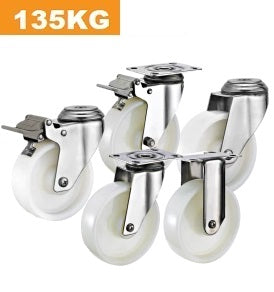

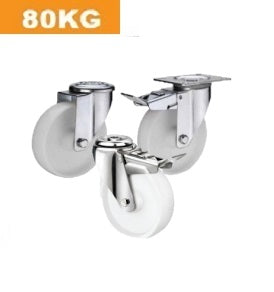

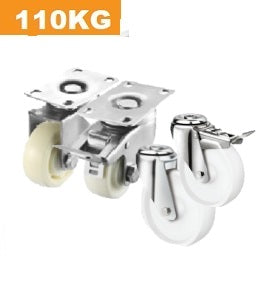

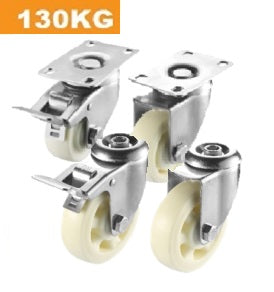

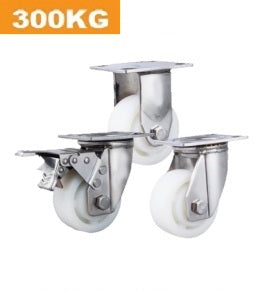

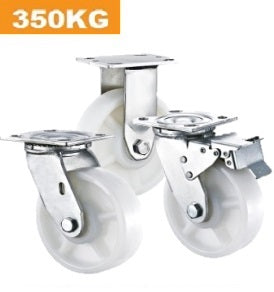

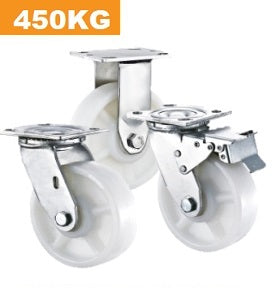

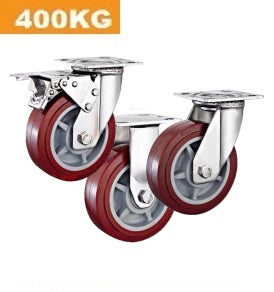


Stainless Steel Castors: Corrosion Resistance for Demanding Environments
Stainless steel castors are specified when the operating environment would corrode a standard zinc-plated or powder-coated bracket. Food processing facilities, pharmaceutical production areas, commercial kitchens, marine applications, and chemical handling environments all require a bracket material that resists rust, withstands washdown, and does not contaminate the product or workspace. This guide covers the key specifications to check before selecting a model.
Grade 304 vs Grade 316 Stainless Steel
Grade 304 stainless steel resists corrosion in most food processing and general industrial environments. It handles regular washdown with water and mild cleaning agents without rusting. Grade 316 stainless steel adds molybdenum to the alloy, which provides significantly better resistance to chloride corrosion. It is the correct choice for marine environments, coastal facilities, and applications involving salt water, brine, or chlorine-based cleaning chemicals. Using grade 304 in a high-chloride environment will result in pitting corrosion over time.
Wheel Material Options
Polyurethane wheels on a stainless steel bracket suit food processing areas where floor protection and quiet rolling matter. They are non-marking and easy to clean. Rubber wheels provide better grip on wet floors and ramps. For applications requiring full stainless steel construction, stainless steel wheels are available, though they are harder and noisier than polymer options. The wheel choice should match both the floor type and the hygiene requirements of the facility.
Hygiene and Cleanability
Stainless steel castors used in food-grade environments should have minimal crevices where bacteria can accumulate. Look for models with sealed bearings, smooth bracket profiles, and no exposed threads on the swivel head. Some models are designed specifically for high-pressure washdown and include sealed swivel bearings rated for regular water ingress. Confirm the bearing seal specification if the castors will be subject to daily pressure washing.
Load Ratings and Configurations
Stainless steel castors are available from light duty (50kg per wheel) through to heavy duty (500kg per wheel and above). Swivel, fixed, and braked configurations are available across the range. The brake mechanism on stainless steel castors is also manufactured from stainless steel or food-grade polymer to prevent corrosion in wet environments.
Frequently Asked Questions
What is the difference between grade 304 and grade 316 stainless steel castors?Grade 304 suits most food processing, pharmaceutical, and general industrial environments. Grade 316 is required for marine applications, coastal facilities, and environments with chloride exposure from salt water, brine, or chlorine-based cleaning chemicals. Using grade 304 in a high-chloride environment causes pitting corrosion.
Are stainless steel castors food safe?The stainless steel bracket and swivel head are food safe. The wheel material also needs to be food grade for direct food contact applications. Polyurethane and rubber wheels used in food environments should be confirmed as food-grade compound. Check the product specification if food contact compliance is required.
Can stainless steel castors be used in a commercial kitchen?Yes. They are a standard specification for commercial kitchen trolleys and equipment. Grade 304 is adequate for most kitchen environments. If the trolley will be used near a dishwasher or in a high-humidity area with chlorine-based sanitisers, grade 316 is the safer choice.
Do stainless steel castors rust?Stainless steel resists rust but is not completely immune. In high-chloride environments, grade 304 will develop surface pitting over time. Grade 316 provides significantly better chloride resistance. Surface contamination from carbon steel tools or contact with standard steel can also cause surface rust on stainless steel, which can be removed with a stainless steel cleaner.
Are stainless steel castors suitable for outdoor use?Grade 316 stainless steel castors suit outdoor and coastal environments where salt air and moisture would corrode standard brackets. Grade 304 is adequate for sheltered outdoor areas away from direct salt exposure.