

Extra Heavy Duty Castors
Australian Wheel & Castors stocks extra heavy-duty castors for the most demanding industrial applications, including heavy machinery bases, steel fabrication equipment, mining support vehicles, and large-scale material handling systems. Load ratings start from 900kg per wheel and extend to several tonnes. Forged steel brackets, roller bearings, and cast iron or polyurethane-bonded wheels are standard at this specification. All orders ship fast across Australia.






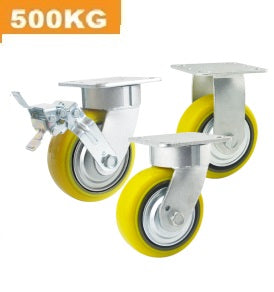

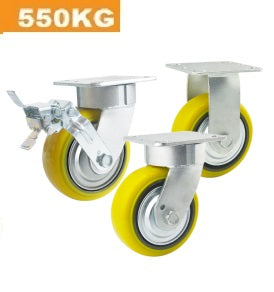

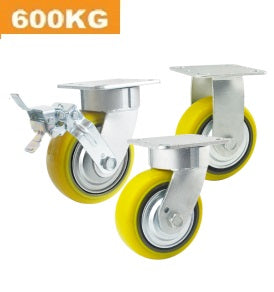

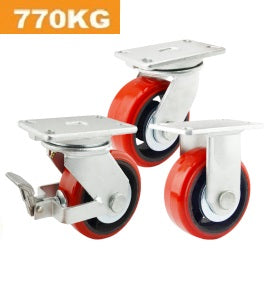

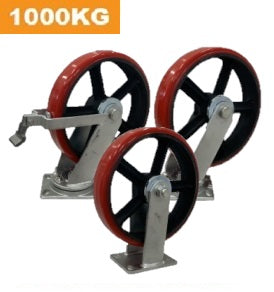

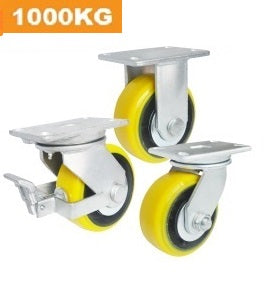

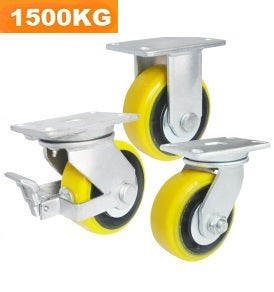

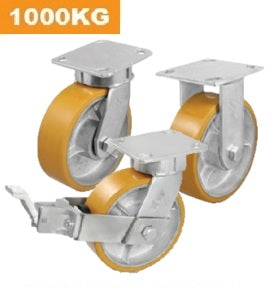

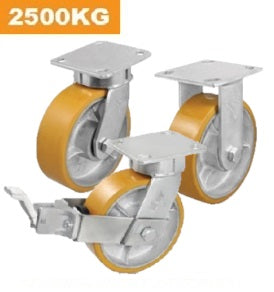

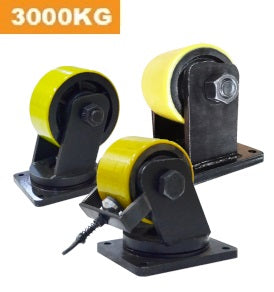

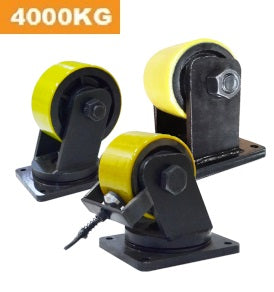

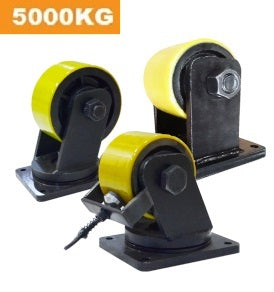

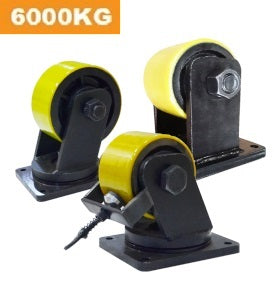


Extra Heavy Duty Castors: Engineering-Grade Mobility for Extreme Loads
Extra heavy duty castors operate where standard industrial castors reach their structural limit. Applications include heavy press and machinery bases, steel fabrication tables, large-format printing equipment, mining support structures, and multi-tonne material handling systems. At this specification, every component, from the forged bracket to the bearing assembly, is selected for sustained performance under extreme load.
Load Ratings from 900kg Per Wheel
Extra heavy duty castors are rated from 900kg per wheel, with some models exceeding 3,000kg per wheel for specialised applications. The bracket at this rating is typically forged or fabricated from thick-gauge structural steel rather than pressed sheet. Confirm both the dynamic load rating (equipment in motion) and the static load rating (equipment stationary) before ordering, as these figures differ and both matter for safe operation.
Cast Iron and Polyurethane-Bonded Wheels
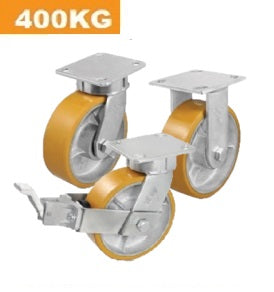
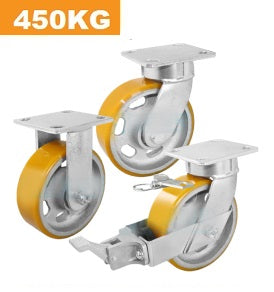
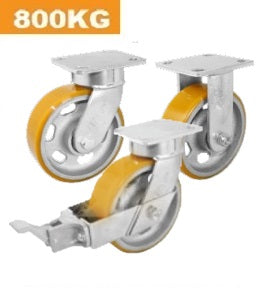
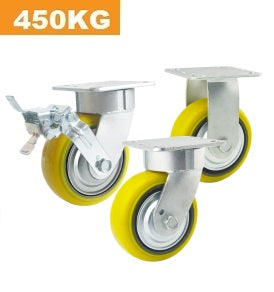
Cast iron wheels are the standard choice for very rough surfaces, outdoor yards, and high-temperature environments. They resist deformation under extreme point loads and last for years in abrasive conditions. Polyurethane-bonded cast iron wheels combine the structural strength of a cast iron core with a polyurethane tread that protects smooth floors and reduces rolling noise. The bonded construction handles loads that would crack a solid polyurethane wheel.
Bearing Specification at Extreme Loads
Tapered roller bearings are standard in extra heavy duty swivel heads. They handle both radial loads (the weight pressing down) and axial loads (the lateral force during direction changes) simultaneously. At loads above 1,000kg per wheel, the bearing specification is as important as the wheel rating. A castor with an undersized bearing will fail at the swivel head before the wheel shows wear.
Mounting and Installation Requirements
Extra heavy duty castors use large top plates, typically 200mm x 160mm or larger, with heavy-gauge bolt holes. The mounting surface must be structural steel or heavy fabricated plate, not thin sheet metal. Bolts should be grade 8.8 or higher, torqued to specification. For equipment that will be moved frequently, weld-on mounting sockets provide a more secure connection than bolted plates under repeated dynamic loading.
Frequently Asked Questions
How do I calculate the load rating needed for extra heavy duty castors?Divide the total weight of the equipment by the number of castors, then add a minimum 30% safety buffer for dynamic loading, floor irregularities, and uneven weight distribution. For equipment that will be moved on slopes or subject to impact loading, increase the buffer to 50%.
What is the difference between a cast iron wheel and a polyurethane-bonded cast iron wheel?A solid cast iron wheel is hard, durable, and suited to rough outdoor surfaces and high temperatures. A polyurethane-bonded cast iron wheel has a cast iron core with a polyurethane tread bonded to the outside. The tread protects smooth floors, reduces rolling noise, and provides better grip, while the cast iron core carries the structural load.
Can extra heavy duty castors be used on epoxy-coated warehouse floors?Polyurethane-bonded wheels are the correct choice for epoxy-coated floors at this load range. Solid cast iron wheels will crack and chip epoxy coatings under extreme point loads. Confirm the wheel hardness and contact area against the floor coating specification before installation.
What bolt grade should I use to mount extra heavy duty castors?Use grade 8.8 bolts as a minimum, torqued to the manufacturer's specification. For dynamic applications where the equipment is moved frequently, consider grade 10.9 bolts with locking washers. Recheck torque after the first week of use, as bolts in high-vibration environments can loosen under initial loading cycles.
Do you supply extra heavy duty castors for custom or non-standard applications?Contact us with your load requirement, floor type, operating environment, and any dimensional constraints. We can advise on the correct specification and confirm availability for non-standard configurations.