

Wheels & Castors
Australian Wheel & Castors stocks industrial castors and wheels for every load rating, floor type, and mounting configuration. From light-duty office chair castors to extra heavy-duty swivel units rated for several tonnes, the range covers commercial, industrial, and domestic applications. All orders ship fast to workshops and warehouses across Australia.
Products include castors, castor wheels, wheel casters, trolley wheels, hand trolleys, low temperature castors, high temperature castors, level adjustment castors, workbench castors and more.


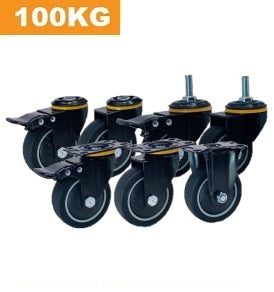

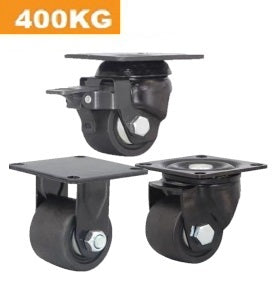

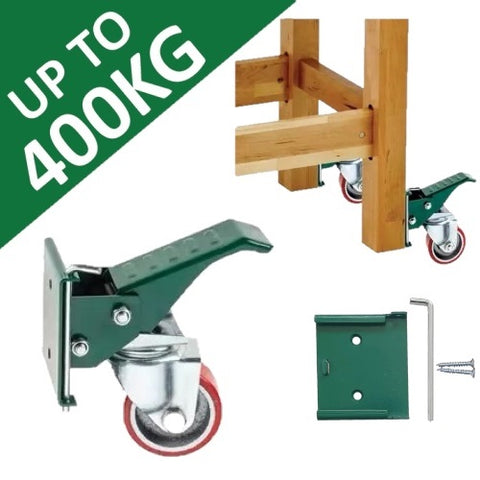


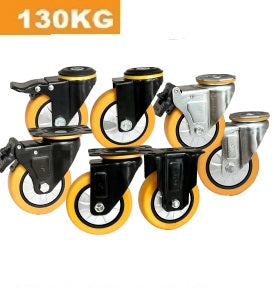

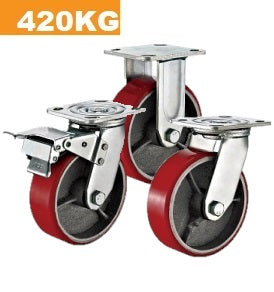


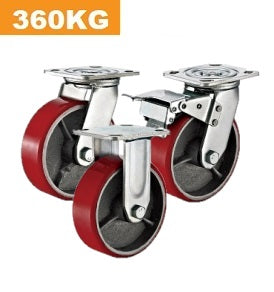

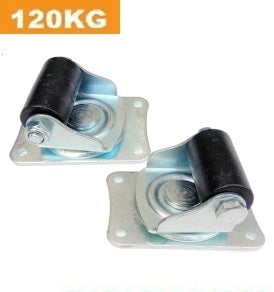

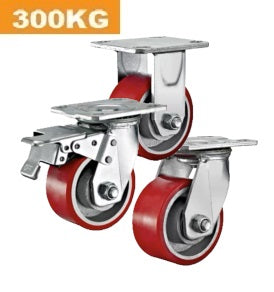


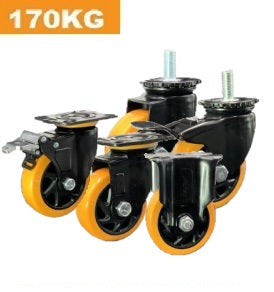


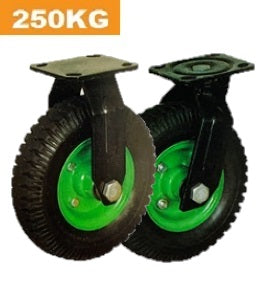


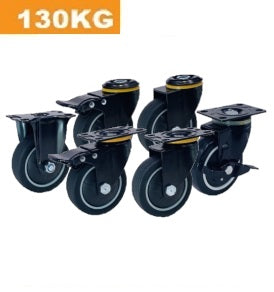

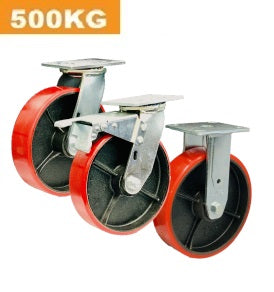

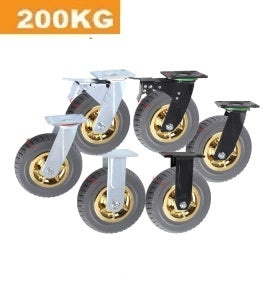
Castors and Industrial Wheels for Every Application
Selecting the right castor affects equipment safety, floor condition, and how long your hardware lasts. This guide covers the four decisions that matter most: load rating, wheel material, configuration type, and mounting style.
Load Capacity: Choosing the Right Rating
Castor load ratings are calculated per wheel. Divide your total equipment weight by the number of castors, then add a buffer for uneven floors where weight shifts onto fewer contact points. Selecting a castor rated well above your minimum requirement extends service life and reduces failure risk.
Wheel Material and Floor Compatibility
Polyurethane wheels suit smooth indoor surfaces including polished concrete, timber, and vinyl. They roll quietly and leave no marks. Hard nylon and cast iron wheels handle rough concrete, outdoor terrain, and high-temperature environments. Soft rubber provides grip on ramps and wet surfaces.
Swivel, Fixed, and Braked Configurations
Swivel castors rotate 360 degrees for full directional control in tight spaces. Fixed castors track straight and provide stability under heavy loads. Braked models lock the wheel, the swivel, or both simultaneously to hold equipment stationary on slopes or during loading.
Mounting Types
Plate-mount castors bolt directly to a flat surface using four fixing points. Stem-mount castors insert into a socket or thread into a pre-drilled hole. Matching the mounting type to your existing equipment avoids fabrication work and speeds up installation.
Frequently Asked Questions
What is the difference between a swivel and a fixed castor?A swivel castor rotates on a vertical axis, allowing steering in any direction. A fixed castor rolls only forward and backward, providing straight-line stability under load.
How do I choose the right wheel material for my floor?Match the wheel hardness to the surface. Soft polyurethane and rubber protect smooth indoor floors. Hard nylon and cast iron suit rough concrete and outdoor conditions.
What does a total lock brake do?It locks both the wheel rotation and the swivel bearing at the same time, keeping the castor completely stationary regardless of floor angle or applied force.
How do I calculate the load capacity I need?Divide the total weight (equipment plus maximum load) by the number of castors. Add at least 25% as a safety buffer to account for weight distribution on uneven surfaces.
Can I replace a single broken castor without replacing the set?Yes, provided you match the mounting type, stem size or plate dimensions, and overall height. Mismatched heights cause the equipment to sit unevenly and increase stress on the remaining castors.